How to Remove Old Set-In Stains From Carpet With Hydrogen Peroxide
Set-in carpet stains are a different challenge than fresh spills. Once a stain has dried and bonded to the fibers, blotting alone won’t touch it. The stain needs something that can break it down at a chemical level — and hydrogen peroxide, the same inexpensive bottle found in medicine cabinets, is one of the more reliable tools for the job.
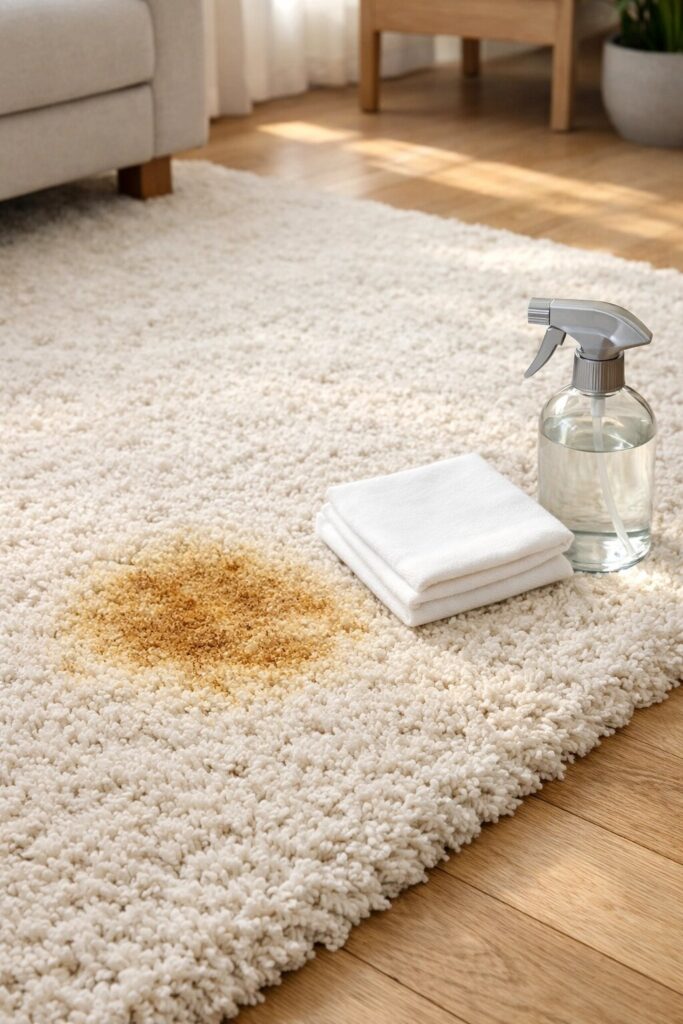
Hydrogen peroxide works through oxidation, a process that can disrupt the color-causing compounds in organic stains like coffee, juice, and food residue. It won’t work on every stain, and results on carpet depend heavily on fiber type, dye stability, and how long the stain has been there. But for many common set-in carpet stains, it’s a reasonable first step.
The methods below cover the main ways to use hydrogen peroxide to remove old set-in stains from carpet — from a basic soak to targeted approaches for specific stain types.
- Always test hydrogen peroxide on a hidden section of carpet before treating a visible area — some carpet dyes are not colorfast.
- The 3% concentration sold at most drugstores is generally the right starting point for carpet use.
- Older set-in stains may require more than one treatment cycle before any improvement shows.
What You’ll Need
Materials
- 3% hydrogen peroxide
- Liquid dish soap
- Clean white cloths (several)
- Cold water
- Spray bottle (optional)
Tools
- Soft-bristled brush
- Weighted object (such as a stack of books)
Removing Old Set-In Stains From Carpet
Hydrogen peroxide is an oxidizing agent, which means it can break down the molecules responsible for visible staining in organic materials. That makes it useful for dried food stains, coffee, juice, and similar deposits that have had time to set. For best results when removing set-in stains from carpet, begin with the least aggressive approach and work up from there.
Should You Test Before Treating?
Yes — and it’s worth taking seriously before anything else. Hydrogen peroxide can lighten or alter certain carpet dyes, particularly on darker synthetic fibers, wool blends, and older carpets. Before applying it to a visible stain, dab a small amount onto an out-of-the-way section of carpet — inside a closet or behind a piece of furniture works well. Let it sit for 10 minutes, then blot dry and check for any color change.
If the test area shows any lightening or shift in color, hydrogen peroxide is likely not appropriate for that carpet.
The Basic Soak Method for General Stains
For most dried organic stains — coffee rings, juice spills, and food residue — a simple soak is a good place to start.
- Vacuum the stained area to remove any loose debris.
- Apply 3% hydrogen peroxide directly to the stain, saturating the area without soaking through to the carpet pad.
- Let it sit for 5 to 10 minutes.
- Blot with a clean white cloth, working from the outer edge of the stain toward the center.
- Rinse the area with cold water and blot dry.
- Repeat if needed — older stains often require two or three passes.
When to Add Dish Soap to the Mix
If the basic soak doesn’t show results after a couple of attempts, adding a small amount of dish soap can help. Dish soap contains surfactants that lift oil from carpet fibers, which allows the hydrogen peroxide to penetrate more effectively.
- Mix one tablespoon of liquid dish soap with one cup of 3% hydrogen peroxide. Stir gently rather than shaking to avoid excess foam.
- Apply the mixture to the stain with a cloth or soft-bristled brush, working it in with light pressure.
- Allow it to sit for 5 minutes, then blot away.
- Rinse thoroughly with cold water and blot dry.
Use a light hand with the soap. Residue left in carpet fibers can attract future dirt.
Using a Spray Bottle for Larger or Spread-Out Stains
A spray bottle gives more even coverage for stains that have spread across a wider area or have been partially cleaned before. It also makes it easier to control how much solution goes down, which helps avoid over-saturating the carpet backing.
- Fill a clean spray bottle with 3% hydrogen peroxide. For carpets that tested borderline on the color-fastness check, dilute to a 1:1 ratio with cold water.
- Mist the stained area evenly.
- Lay a clean white cloth over the damp area and press firmly to encourage contact between the solution and the fibers.
- Leave for 5 to 10 minutes, then blot dry.
This approach works particularly well on flat, low-pile carpet where the cloth can press flush against the surface.
How to Tackle Dried Coffee and Tea Stains
Coffee and tea stains contain tannins, which bond to carpet fibers quickly and deepen in color as they dry. Hydrogen peroxide can break down tannin-based staining, though results on older deposits tend to be gradual.
- Apply 3% hydrogen peroxide to the stain and let it dwell for up to 10 minutes.
- If the stain is dark or long-set, the dish soap mixture above may improve penetration.
- Blot — don’t scrub. Scrubbing spreads tannins laterally and works them deeper into the pile.
- Rinse with cold water and blot dry. Repeat as needed.
Once you’ve finished blotting, place a stack of books over a folded clean cloth on the damp area. The weight draws remaining moisture — and dissolved stain — upward into the cloth instead of allowing it to re-absorb into the fibers as the carpet dries.
What to Expect After Treatment
Hydrogen peroxide is a useful tool for set-in carpet stains, but it isn’t a guaranteed fix. Some stains respond clearly to a single treatment. Others require several rounds before any noticeable difference appears. A few — particularly stains that are very old, have been treated with multiple products over time, or have altered the carpet fiber itself — may only partially lighten at best.
Why Does a Stain Come Back After Cleaning?
If a stain reappears after the carpet dries, the likely cause is wicking. When moisture from cleaning reaches the carpet backing, it can carry dissolved residue back up to the surface as it evaporates. The stain appears to return, though it’s often material migrating up from the padding rather than anything new.
To reduce wicking, blot the area thoroughly while it’s still damp, use weighted pressure to pull moisture upward rather than letting it sit, and allow the area to dry as quickly as possible. A fan directed at the treated area can help.