9 Easy Ways to Keep Hardwood Floors Clean Without Mopping Every Day
Keeping hardwood floors clean is less about how often you mop and more about what happens between moppings. For most hardwood finishes, daily mopping isn’t just unnecessary — excess moisture and frequent cleaning solutions can wear down the finish gradually. The methods below focus on keeping dirt from settling in the first place.
- Hardwood floors stay cleaner longer when dirt and grit are intercepted at entry points before they reach the floor surface.
- Daily dry maintenance — sweeping or dust mopping — can do more to protect hardwood finish than periodic wet mopping.
- Small, consistent habits spread across the week are generally more effective than one thorough cleaning session.
9 Ways to Keep Hardwood Floors Clean Between Moppings
1. Put Doormats at Every Entry Point
Most of what ends up on a hardwood floor walked in from outside. A mat at every exterior door — one outside to scrape soles, one inside to catch residual moisture — can intercept a meaningful amount of grit and debris before it reaches the floor.
The mats themselves need regular shaking or vacuuming, otherwise they become a source of debris rather than a barrier against it.
2. Keep a Dry Dust Mop Within Reach
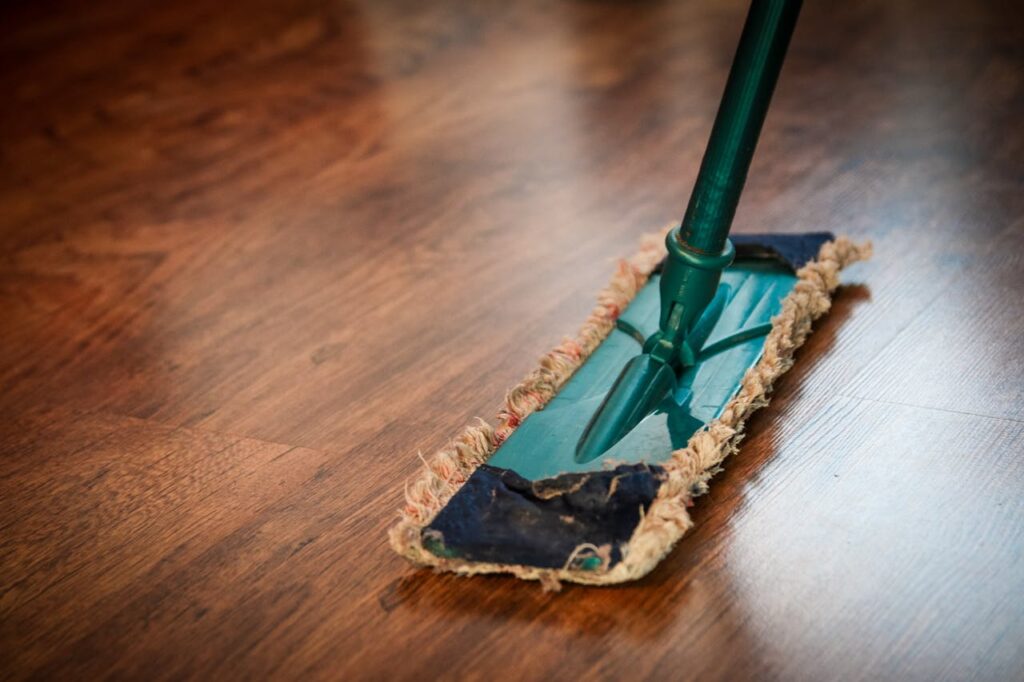
A dust mop used daily or every other day can do more for hardwood floors than a weekly wet mop. Fine dust and grit left on the surface can act like sandpaper underfoot, gradually dulling the finish over time.
Flat microfiber dust mops work well on hardwood because the fibers pull particles in rather than pushing them around — keeping one somewhere easy to grab makes using it a two-minute habit rather than a chore.
Wash microfiber dust mop pads regularly — a pad that’s already saturated with dust redistributes more than it collects. Most are machine washable and dry quickly.
3. Adopt a No-Shoes Policy Indoors
Shoes bring in more than visible dirt — fine particles, outdoor chemicals, and moisture that accumulate between cleanings. A no-shoes policy can be one of the more effective changes for hardwood floor maintenance.
A small bench or shoe rack near the entrance makes the habit easier to maintain. For situations where a full policy isn’t practical, keeping certain rooms shoe-free can still make a noticeable difference.
4. Deal With Spills Right Away
Liquid left on hardwood can work into the seams between boards within minutes, depending on the finish. Blotting with a dry cloth — rather than wiping, which spreads the liquid — handles most spills before they cause a problem.
For sticky spills, a slightly damp cloth followed by a dry one is usually enough without reaching for a mop.
⚠ Warning
Avoid letting standing water sit on hardwood floors even briefly. Repeated exposure — even from a mop that’s too wet — can cause boards to swell, warp, or separate at the seams over time.
5. Use Rugs in High-Traffic Areas
Hallways, the area in front of the kitchen sink, and main seating areas take more floor traffic than anywhere else in a home — and that’s where grit gets ground into the surface most consistently.
A runner in the hallway and a small rug in front of the sink can quietly absorb a meaningful amount of that wear. When choosing rugs for hardwood, check the backing — some rubber backings can discolor certain finishes over time. Felt or fabric-backed options are generally a safer choice.
6. Vacuum on a Regular Schedule
A dust mop doesn’t reach everything — debris that works into the gaps between boards or settles along baseboards needs a vacuum to shift it properly. Running a vacuum with a hardwood floor setting two or three times a week in busy areas can help keep that buildup from becoming visible.
One thing worth confirming: that the beater bar is switched off. The rotating brush designed for carpet can scratch hardwood finish with repeated use.
Pay extra attention to the areas under furniture and along baseboards — dust accumulates there faster than in open floor space and is easy to overlook during a quick pass.
7. Add Felt Pads Under Furniture Legs
Scratches on hardwood floors accumulate in small increments — a chair pulled out, a table shifted slightly — until the wear pattern becomes visible. Felt pads under furniture legs can help reduce that friction, and are worth checking every few months.
They pick up grit on their surface over time, which can eventually make them abrasive rather than protective.
8. Sweep the Kitchen After Cooking
The kitchen floor picks up more debris than most other rooms — crumbs and fine grease particles settle during cooking and can get walked through the rest of the home if not addressed promptly.
A quick sweep after cooking, before anything has a chance to travel, is one of the more practical habits for keeping the whole house cleaner. A small handheld broom kept in the kitchen removes the step of going to find one.
9. Control Humidity Levels Indoors
Hardwood floors respond to moisture in the air as well as on the surface. High humidity can cause boards to expand; very dry conditions can cause them to contract and gap.
Keeping indoor humidity between 35 and 55 percent — a commonly cited range for hardwood stability — can help prevent that cycle. A hygrometer gives an accurate reading of what’s actually happening in the room without guesswork.
When to Actually Mop
Even with consistent dry maintenance, hardwood floors will periodically need a wet clean. For most households, mopping every two to four weeks is a reasonable interval. When you do mop, use a well-wrung mop and a cleaner formulated for hardwood. Steam mops are worth avoiding — the heat and moisture can damage the finish and work into the seams between boards over time.