How to Clean Plastic Cutting Boards With Hydrogen Peroxide
Plastic cutting boards accumulate bacteria, stains, and odors over time, particularly in the knife grooves that develop with regular use. Washing with dish soap and warm water handles surface debris, but it may not address deeper contamination in scored surfaces. Cleaning plastic cutting boards with hydrogen peroxide offers a practical sanitizing step that many home cooks add after routine washing.
The effectiveness of this method depends on the condition of the board and how consistently it’s applied. Deeply grooved boards or those with heavy discoloration may show limited improvement from hydrogen peroxide alone. For boards used with raw meat, poultry, or seafood, additional sanitizing frequency may be warranted.
The steps below cover how to apply hydrogen peroxide to plastic cutting boards safely, what concentration to use, and how to adjust the process for different levels of use and surface condition.
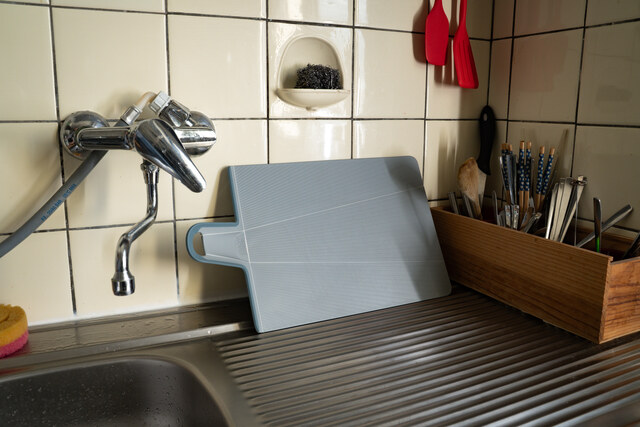
Tools and Materials
Tools
- Dish brush or soft-bristle scrub brush
- Clean spray bottle
- Dish rack
Materials
- Dish soap
- Warm water
- 3% hydrogen peroxide (standard drugstore concentration)
- Clean cloth or paper towels
How to Clean Plastic Cutting Boards With Hydrogen Peroxide
This method applies to intact plastic cutting boards in reasonable condition. Boards with deep gouges, heavy warping, or persistent discoloration that doesn’t respond to repeated cleaning may be past the point where surface sanitation is practical.
Hydrogen peroxide at 3% concentration — the standard variety sold in pharmacies — is appropriate for household use on food-contact surfaces. Higher concentrations are not necessary for this application and can irritate skin and eyes on contact.
Routine Sanitizing After Washing
Use this approach for regular maintenance sanitizing on boards that see frequent use. Hydrogen peroxide works most effectively on surfaces already free of visible food debris, grease, and soap residue. Apply it only after a thorough wash.
You will need:
- Dish soap and warm water
- Dish brush or sponge
- 3% hydrogen peroxide
- Spray bottle
- Paper towels or clean cloth
- Wash the board thoroughly on both sides with dish soap and warm water.
- Scrub all surfaces with a dish brush, paying particular attention to knife grooves and edges.
- Rinse the board completely under warm running water until no soap residue remains.
- Do not apply hydrogen peroxide over soap residue — rinse the board fully before proceeding.
- Spray an even layer of 3% hydrogen peroxide across the entire top surface of the board.
- Flip the board and spray the underside as well.
- Let the hydrogen peroxide sit undisturbed for 5 to 10 minutes. Light bubbling on the surface is a normal reaction.
- Rinse the board thoroughly under warm running water.
- Stand the board upright on a dish rack and allow it to air dry completely before storing.
Laying a board flat to dry can trap moisture underneath and encourage bacterial growth. Upright drying on a rack allows air circulation on both sides.
Sanitizing Boards Used for Raw Meat or Poultry
Boards used for raw meat, poultry, or seafood benefit from more thorough sanitizing after each use. The steps are similar to routine cleaning, but contact time and scrubbing attention increase.
You will need:
- Dish soap and hot water
- Stiff-bristle scrub brush
- 3% hydrogen peroxide
- Spray bottle
- Paper towels or clean cloth
- Scrape off any visible food debris from the board surface before washing.
- Wash the board on both sides with dish soap and hot water. Use a stiff-bristle brush and scrub firmly, including all grooves.
- Rinse completely under hot running water.
- Inspect the surface before applying hydrogen peroxide — any remaining food residue will reduce its effectiveness. Re-wash if needed.
- Spray 3% hydrogen peroxide generously across the entire board surface, including edges.
- Allow the solution to sit for 10 minutes without disturbing it.
- Rinse thoroughly under hot running water.
- Air dry upright on a rack.
For boards used daily with raw proteins, this process is worth repeating consistently rather than relying on periodic deep cleaning. Hydrogen peroxide used at this concentration is a supplemental step, not a replacement for thorough washing.
Addressing Surface Stains With Hydrogen Peroxide
Plastic boards used for strongly pigmented foods can develop surface staining that dish soap alone won’t fully lift. Hydrogen peroxide can lighten some surface stains through repeated application, though results vary depending on how deeply pigment has set into the plastic and how long the stain has been present.
You will need:
- Dish soap and warm water
- 3% hydrogen peroxide
- Spray bottle
- Soft-bristle scrub brush
- Paper towels
- Wash and rinse the board fully as described in the routine method above.
- Spray a generous, even layer of hydrogen peroxide over the stained areas.
- Allow it to sit for 15 to 20 minutes — longer contact time may improve results on set-in stains.
- Use a soft-bristle brush to gently scrub the stained surface in small circular strokes.
- Rinse thoroughly under warm running water.
- If staining remains, repeat the process once more before drying.
- Air dry upright on a rack.
Stains embedded in knife grooves are typically the most resistant and may not lift fully regardless of contact time. Repeated applications over several cleaning cycles may gradually reduce visible discoloration, but complete removal is not reliable on older boards.
Safety Tips for Using Hydrogen Peroxide on Cutting Boards
Hydrogen peroxide at 3% concentration is low-risk for household use, but a few precautions apply when using it on food-contact surfaces.
- Use only 3% concentration. Higher concentrations — 6%, 12%, or food-grade 35% — are not appropriate for this application. They can bleach the board surface, irritate skin and eyes, and are unnecessary for routine sanitizing.
- Never mix hydrogen peroxide with other cleaning agents. Combining it with dish soap in the same application can reduce its effectiveness. Always rinse the board fully of soap before applying.
- Avoid contact with eyes and prolonged skin contact. Standard 3% hydrogen peroxide is mild, but direct eye contact requires immediate rinsing with water. Wearing gloves is reasonable if you have sensitive skin.
- Do not use hydrogen peroxide as a substitute for washing. It is a supplemental sanitizing step. Applying it to a board that hasn’t been properly washed first will reduce its effectiveness.
- Ventilate the area during use. Hydrogen peroxide at 3% produces minimal fumes, but working near an open window or with kitchen ventilation running is a reasonable precaution.
- Keep out of reach of children. Store the bottle in a secure location away from food items and cleaning products it could be confused with.
Storing Hydrogen Peroxide Correctly
Standard 3% hydrogen peroxide is low-risk at household concentrations but requires basic storage attention to remain effective.
- Keep it in its original opaque bottle. Light exposure degrades the solution over time.
- Store away from direct heat and out of reach of children.
- Check the expiration date before use — expired solution may have lost potency.
- If the solution no longer produces light bubbling when applied to a surface, it has likely degraded.
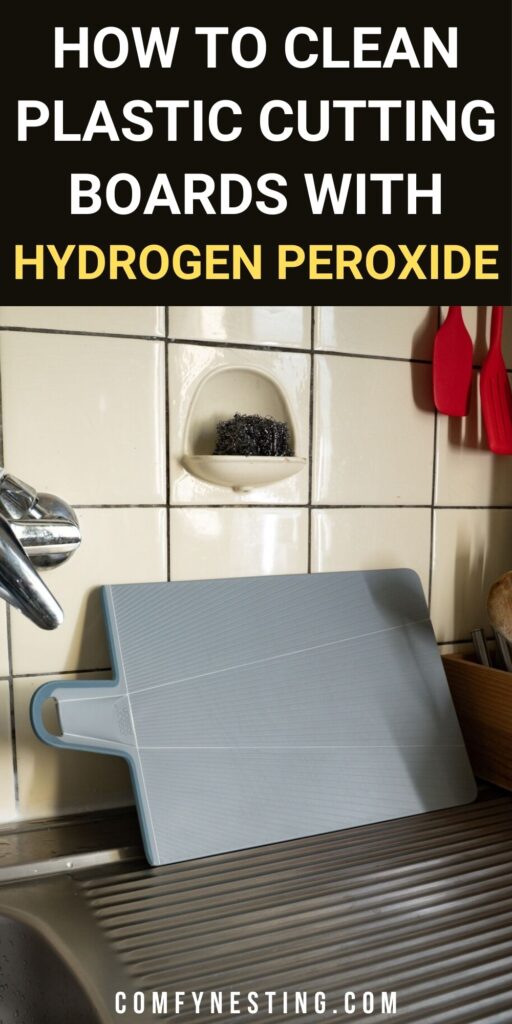
We hope you enjoyed this guide on how to clean plastic cutting boards with hydrogen peroxide. If you found it helpful, please share it on Facebook or Pinterest.