8 Ways to Clean Cleaning Tools
Your cleaning tools need to be clean to do their job effectively. Sponges, mop heads, scrub brushes, and microfiber cloths can pick up bacteria, soap residue, and debris with everyday use. When those tools aren’t maintained, they may spread grime across the surfaces you’re trying to clean.
Knowing how to clean cleaning tools properly depends on the material each tool is made from. Microfiber needs a different approach than a string mop. A rubber squeegee blade requires less effort to maintain than a scrub brush packed with bristles.
This guide walks through eight cleaning tools and the specific method that works for each one — including what to use and step-by-step instructions.
Tools and Materials
Tools
- Bucket or utility sink
- Old comb or stiff wire
- Rubber gloves
- Washing machine (for applicable items)
- Scissors or seam ripper
Materials
- Liquid dish soap
- Laundry detergent (fragrance-free recommended for microfiber)
- Hydrogen peroxide (3%)
- Warm and hot water
- Clean dry towels or drying rack
Optional
- Mesh laundry bag
- Spray bottle
- Old toothbrush for detail cleaning
8 Ways to Clean Your Cleaning Tools
How to Clean a Scrub Brush
Scrub brushes used on tile, grout, and sinks collect embedded debris and soap residue in the bristle base. Clean them weekly, or after any heavy scrubbing session.
Steps:
- Tap the brush firmly against the edge of the sink to knock out loose debris.
- Fill a bucket or sink with warm water and a few drops of dish soap.
- Work the bristles back and forth against your gloved palm to loosen trapped particles.
- Rinse under running water until the water runs completely clear.
- Mix 1 part hydrogen peroxide with 2 parts water in the bucket.
- Soak the brush head in the solution for 10 minutes to address odor and surface bacteria.
- Rinse again thoroughly, shake out excess water, and air-dry bristle-side down on a rack.
How to Sanitize a Sponge
Sponges pick up bacteria quickly and need sanitizing every two to three days with regular use. This method works on cellulose and synthetic sponges that are still structurally intact.
Steps:
- Rinse the sponge under warm running water and squeeze it repeatedly to flush out loose debris.
- Mix 1 part hydrogen peroxide with 2 parts water in a bowl or bucket.
- Submerge the sponge fully and let it soak for 5 minutes.
- Rinse under running water and squeeze until no solution remains.
- Allow the sponge to air-dry in a well-ventilated spot between every use.
Tip: A sponge that still smells after sanitizing should be discarded. Persistent odor typically indicates bacterial buildup too deep to reach with surface sanitizing.
Also Read: How to Sanitize Kitchen Countertops
How to Wash Microfiber Cloths
Microfiber cloths trap dirt effectively, but fabric softener and high heat break down their fibers over time. Wash them after every use, or when visibly soiled.
Steps:
- Shake out loose debris over a trash bin before washing.
- Wash in warm water on a gentle machine cycle using a small amount of fragrance-free laundry detergent.
- Wash microfiber cloths separately — cotton fibers from other laundry shed lint that clogs microfiber.
- Skip fabric softener entirely, every time.
- Air-dry or tumble dry on the lowest heat setting available.
Tip: Microfiber cloths that feel stiff or no longer pick up dust easily may have fibers coated with residue. A second wash cycle without detergent can sometimes restore them.
Also Read: How to Clean Kitchen Countertops With a Microfiber Cloth
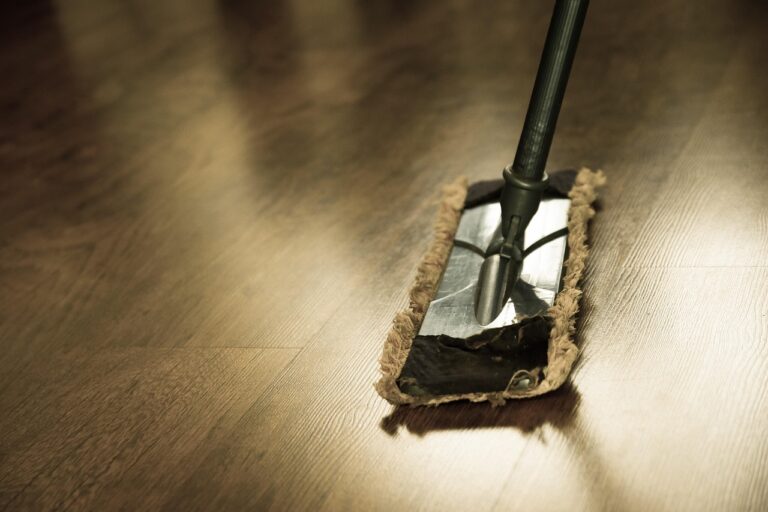
How to Clean a Mop Head
Mop heads need to be rinsed after every single use. A deeper clean with soap and water should follow any session where the mop contacted heavily soiled floors.
Steps:
- Immediately after mopping, rinse the mop head under hot running water until the water runs clear.
- Fill a bucket with hot water and one tablespoon of dish soap.
- Submerge the mop head and swirl it vigorously for several minutes.
- Wring out fully and rinse again until no suds remain.
- Wring once more and hang to dry — head down or suspended — in a well-ventilated area.
⚠️ Never store a wet mop head in a closet or enclosed bucket. Mildew can form within hours in low-airflow spaces.
Tip: For detachable machine-washable mop heads, check the care label and wash on a hot cycle with laundry detergent. Do not use fabric softener or bleach on synthetic or microfiber mop heads.
How to Clean a Broom
Indoor brooms accumulate hair, dust, and fine particles between the bristles. Plan to clean brooms monthly, or whenever you notice visible buildup at the bristle base.
Steps:
- Take the broom outside and shake it firmly to dislodge loose particles.
- Use an old comb or a stiff wire to work through the bristles and pull out tangled hair and debris.
- Fill a bucket with warm water and a small amount of dish soap.
- Dip the bristle end into the soapy water and work gently to loosen any buildup at the base.
- Rinse under running water and shake out excess moisture.
- Store bristle-side up or hang the broom until completely dry before using again.
Tip: Prolonged soaking can warp or loosen the bristle base on some broom styles, particularly natural fiber brooms. Keep the soak brief — a few minutes is sufficient.
How to Clean a Squeegee
Squeegee blades pick up soap film and mineral deposits quickly. Wipe the blade after every use, and give the frame and handle a deeper clean monthly.
Steps:
- After each use, wipe both sides of the rubber blade with a damp cloth to remove soap film and water.
- For a deeper clean, wash the blade with dish soap and warm water.
- Inspect the blade edge for nicks, curling, or cracks — any of these will cause streaking on glass.
- Wipe the handle and frame with a cloth dampened in warm soapy water to remove buildup around joints and connectors.
- Dry the squeegee fully before storing.
Tip: Mineral deposits on the frame respond well to a cloth dampened with hydrogen peroxide (3%) applied directly and wiped clean.
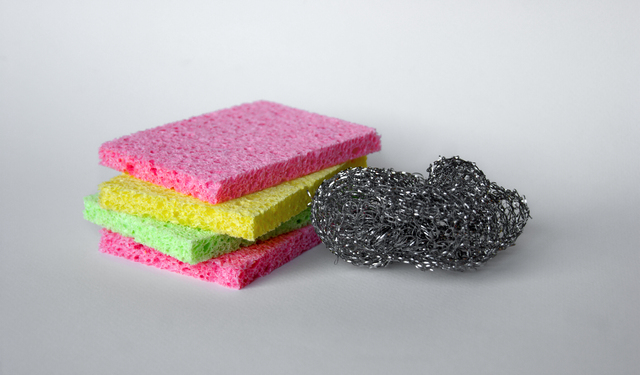
How to Clean Scrub Pads and Steel Wool
Synthetic scrub pads can be rinsed and reused a limited number of times. Steel wool has a shorter window — rinse it only when it shows no rust and the fibers are still intact.
Steps:
- Rinse the pad immediately after use under warm running water.
- Apply a small amount of dish soap and work it through the pad under running water.
- Rinse thoroughly until the water runs clear.
- Press the pad between dry towels to remove as much moisture as possible.
- Store in a dry location with good airflow — not sealed in a container or left in a wet sink.
Tip: Discard steel wool at the first sign of rust. Rust transfers to surfaces and can leave stains that are difficult to remove. Replace synthetic pads once the surface becomes matted or no longer abrades effectively.
How to Clean Vacuum Attachments
Crevice tools, brush rolls, and upholstery attachments collect hair, dust, and debris that reduce suction performance over time. Clean them monthly, or more often in high-use households.
Steps:
- Detach all accessories from the vacuum before starting.
- Use scissors or a seam ripper to cut and pull tangled hair away from the brush roll.
- Wipe hard plastic attachments with a cloth dampened in warm water and a small amount of dish soap.
- Use an old toothbrush to scrub around bristle bases, joints, and narrow crevice openings.
- Rinse removable plastic parts under warm water.
- Dry all parts with a towel, then allow them to air-dry for at least 24 hours before reattaching.
⚠️ Do not submerge any attachment that contains electrical components or is not explicitly labeled as washable by the manufacturer.
Also Read: How to Change a Vacuum Filter
How Often to Clean Each Tool
Cleaning frequency depends on how often the tools are put to work, the surfaces they contact, and the level of soiling involved. Tools used daily in bathrooms or on heavily soiled surfaces need attention more frequently than those used occasionally on dry or low-traffic areas.
| Tool | Suggested Frequency |
|---|---|
| Sponges | Sanitize every 2–3 days; replace when odor persists |
| Mop heads | Rinse after every use; deep clean after soiled floors |
| Microfiber cloths | After every use or when visibly soiled |
| Scrub brushes | Weekly or after heavy scrubbing |
| Brooms | Monthly or when debris is visible at the base |
| Squeegees | Blade wipe after each use; full clean monthly |
| Scrub pads | Rinse after each use; discard when worn or rusted |
| Vacuum attachments | Monthly; more often in high-use households |