5 Simple Tasks to Avoid Sticky Cabinets
Cabinet doors near the stove tend to develop a tacky film over time — one that feels faintly grimy even right after cleaning. Understanding what causes it makes it easier to stay ahead of it.
When oil heats up during cooking, it releases tiny airborne particles that rise and settle on nearby surfaces. Cabinet fronts catch a disproportionate share of this because of their vertical surface area and proximity to the stove. Dust adheres to that grease layer, and the two combine into the sticky film that’s harder to remove the longer it sits.
The habits below address the problem at each stage — while it’s airborne, right after it lands, and before it has time to harden.
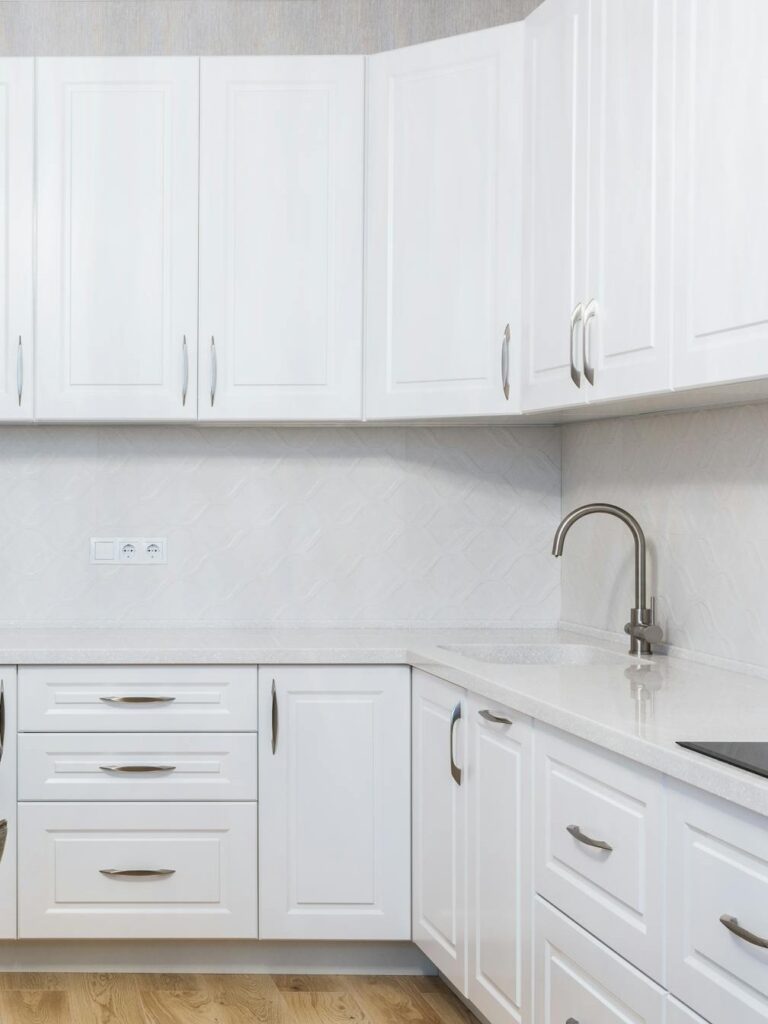
What You’ll Need
- Microfiber cloths (two or more — one damp, one dry)
- Warm water
- Mild dish soap
- All-purpose cleaner (pH-neutral, suitable for your cabinet finish)
- Soft-bristle toothbrush (for hardware and recessed panels)
- Cabinet-specific protectant or furniture polish (optional — check manufacturer guidance first)
1. Wipe Cabinet Fronts Near the Stove After Cooking
Grease is significantly easier to remove while it’s still fresh. Once it cools and hardens — or picks up a layer of dust — it bonds more stubbornly to the finish.
A quick pass with a damp microfiber cloth along the cabinet doors nearest to your cooktop, immediately or shortly after cooking, can prevent the slow accumulation that eventually requires real effort to reverse.
How to do it:
- Dampen a microfiber cloth with warm water. Add a small drop of dish soap if you’ve been cooking with oil.
- Wipe the cabinet fronts using light, even strokes. Work top to bottom so any loosened residue falls clear of areas you’ve already cleaned.
- Follow with a dry cloth to remove moisture, particularly on wood or painted finishes.
Note on wood cabinets: Excess moisture can work into wood grain over time and affect the finish. Wring the cloth thoroughly before wiping, and always dry promptly.
2. Clean Cabinet Hardware Every Week
Handles and pulls accumulate oils from hand contact far faster than the surrounding cabinet surface. That grease transfers to the areas immediately around the hardware — which is why sticky patches often appear in a ring around handles rather than uniformly across the door.
A weekly wipe of all hardware takes a few minutes and interrupts that transfer cycle before it spreads.
How to do it:
- Mix a few drops of dish soap into a small bowl of warm water.
- Dampen a cloth and wipe each handle and pull, working around the base where it meets the cabinet face.
- For pulls with recessed backs or decorative hardware with grooves, a soft-bristle toothbrush can reach where a cloth cannot.
- Dry each piece after cleaning — standing moisture around hardware can mark certain finishes over time.
3. Run the Range Hood While You Cook — and for a Few Minutes After
A functioning range hood pulls airborne grease particles up and out before they have a chance to settle. This is the one preventive step that addresses the problem at the source rather than after the fact.
Running the hood only after you notice smoke or steam tends to miss a significant portion of the airborne grease produced during normal cooking — particularly from high-heat methods like sautéing or pan-frying. Turning it on before you start, and leaving it running for a few minutes after the burners are off, captures more of what would otherwise land on surrounding surfaces.
Worth noting: Range hood filters accumulate grease themselves and need regular cleaning — typically monthly for active home cooks. A clogged filter reduces the hood’s effectiveness considerably. Check your model’s instructions for the recommended cleaning interval.
4. Do a Thorough Cabinet Cleaning Once a Month
Daily and post-cooking wipe-downs handle fresh residue well. What they tend to miss is the thin layer that builds gradually in areas slightly removed from the stove — upper cabinet fronts, the sides of cabinets adjacent to the cooktop, and the panels above eye level that don’t get touched often.
A monthly cleaning with a mild all-purpose cleaner gives these areas proper attention and resets the surface before buildup has a chance to harden.
How to do it:
- Mix a small amount of pH-neutral all-purpose cleaner with warm water according to the product’s directions. Avoid anything with bleach or ammonia on finished wood or painted cabinets — both can dull or strip the finish.
- Work in sections, starting with the cabinets farthest from the stove and finishing with those closest, where residue tends to be heaviest.
- Use a damp — not wet — cloth. Wring it thoroughly before each pass.
- Pay particular attention to the top edges of cabinet doors, where grease rises and settles in a concentrated band, and to the areas directly beside and above the stove.
- Rinse with a clean damp cloth, then dry each section before moving to the next.
For stubborn spots: A paste of baking soda and water applied with a soft cloth can help lift hardened residue without scratching most finishes. Let it sit for two to three minutes before wiping away. Test on a hidden spot first — baking soda is mildly abrasive and may not be appropriate for high-gloss or delicate painted surfaces.
5. Apply a Protective Finish Occasionally
Some cabinet finishes respond well to a thin application of furniture polish or a cabinet-specific protectant. When applied correctly, these products can create a surface that repels grease and moisture slightly — making future cleaning easier and giving the finish some added resilience.
This step isn’t appropriate for every cabinet type. Certain painted finishes, thermofoil, and some laminates don’t benefit from additional product and may react poorly to it.
Before applying anything:
- Check your cabinet manufacturer’s care guidelines. Many manufacturers specify which products are compatible with their finish and which void warranties.
- Test any product on an inconspicuous area — inside a cabinet door or on a side panel — and wait 24 hours before applying more broadly.
- Apply a thin, even layer with a soft cloth and buff gently. Excess product can leave its own residue.
For solid wood cabinets, products containing beeswax or natural oils can help condition the wood while providing a light barrier. These tend to work better than synthetic polishes on raw or lightly finished wood.
What to Avoid When Cleaning Cabinets
A few common cleaning approaches tend to create more problems than they solve:
- Too much water. Excess moisture on wood or at the edges of laminate can cause warping, swelling, or delamination over time.
- Abrasive scrubbers. Steel wool and rough sponge pads can scratch painted or lacquered finishes in ways that are difficult to reverse.
- Bleach and ammonia-based cleaners. These can strip finish and cause discoloration on both painted and stained wood cabinets.
- Over-application of cleaning product. Residue from cleaning solutions — particularly spray cleaners — can itself become a sticky layer if not fully rinsed away.
Questions & Answers
Why do cabinets feel sticky even when I clean them regularly? Sticky residue after cleaning is often a sign that the cleaning solution wasn’t fully rinsed away, or that a product containing silicone or wax has built up over time. Switching to a mild dish soap and warm water solution — rinsed thoroughly and dried — tends to resolve this.
Which cabinets near the stove need the most attention? The fronts directly adjacent to the cooktop and those directly above it tend to accumulate grease fastest. Airborne particles rise with heat, so upper cabinets directly over the stove can develop buildup even if they’re rarely touched.
How often should cabinets near the stove be cleaned? For active home cooks, a post-cooking wipe of the nearest cabinet fronts tends to work well as a baseline, with a thorough cleaning every two to four weeks for high-exposure areas. Cabinets further from the stove generally do fine with monthly attention.
Is white vinegar safe on cabinet finishes? Diluted vinegar — typically equal parts water and vinegar — can be effective on many finishes, but it’s acidic enough to dull some lacquers and damage unsealed wood over repeated use. Test it in an inconspicuous area first and don’t leave it sitting on the surface.
Does humidity make cabinets stickier? It can. Humidity softens existing grease residue and makes surfaces feel tackier. Kitchens with poor ventilation tend to see this more acutely during warmer months. Running the range hood consistently and ensuring the kitchen has adequate airflow can help moderate the effect.
A Note on Cabinet Finish Type
Not all cabinets respond to cleaning the same way. The finish your cabinets have — painted, stained, lacquered, thermofoil, laminate, or raw wood — affects which products are appropriate and how much moisture they can tolerate. When in doubt, the cabinet manufacturer’s care guide is the most reliable reference. For older cabinets without documentation, a conservative approach — warm water, mild dish soap, minimal moisture, and thorough drying — tends to be safe across most finish types.