9 Easy Ways to Speed Up Your Weekly Cleaning Routine at Home
A weekly cleaning routine tends to stretch longer than it needs to because tasks get done in the wrong order, or not at all until they become bigger problems. Disorganized cleaning — moving from room to room without a plan — adds time and physical effort without improving results.
Home cleaning strategies vary because homes vary. Surface types, household size, and how quickly different areas soil all affect how a weekly cleaning schedule should be structured. There is no single system that works equally well across all homes, but several approaches consistently reduce the time spent.
The methods covered here focus on sequencing, tool selection, and habit-stacking — practical changes to how a routine is performed, not just what products are used. These adjustments apply to standard household cleaning tasks and are designed to reduce total time without skipping steps.
- Cleaning from top to bottom and handling dry tasks before wet ones helps reduce unnecessary backtracking.
- Grouping tasks by type instead of by room can significantly cut down transition time.
- Keeping cleaning supplies in each area minimizes time wasted fetching equipment between rooms.
How to Build a Faster Weekly Cleaning Routine
Most time lost in a weekly cleaning routine comes from inefficient sequencing rather than the tasks themselves. Applying a consistent order to your weekly house cleaning — top-to-bottom, dry before wet, high-traffic areas first — tends to reduce total time and the chance of having to redo sections.
Clean top-to-bottom so dust doesn’t reset your work
Dust and debris fall downward. Cleaning shelves, ceiling fans, and light fixtures before floors means falling particles land on surfaces that haven’t been cleaned yet. Starting from the floor and working up reverses this sequence and often requires re-cleaning lower surfaces.
This applies directly to the weekly cleaning routine in any room with ceiling fans or overhead shelving. Wipe or dust high surfaces first, then work down to countertops, then floors last.
Do a full room declutter pass before you start cleaning
Cleaning around objects takes more time than cleaning clear surfaces. A quick pass through each room to remove items that don’t belong — dishes, clothing, tools, mail — allows cleaning to move faster once it starts.
This step doesn’t need to be thorough organization. Moving displaced items out of the way before vacuuming or wiping surfaces typically reduces interruptions during the main cleaning pass.
Keep a small basket at the base of the stairs or near the entrance to each room. During your decluttering pass, place items that belong elsewhere into the basket, then return them all in one trip instead of making multiple trips between rooms.
Group tasks by type instead of by room
Cleaning one room completely before moving to the next feels logical, but it often means switching tools and products repeatedly. Grouping by task type — all vacuuming first, then all mopping, then all surface wiping — reduces the number of equipment changes per session.
This approach works particularly well for routine weekly cleaning in multi-room homes. Vacuuming all floors in sequence, then putting the vacuum away once, saves the time of pulling it out again for each room.
Let products dwell while you work somewhere else
Many cleaning products — toilet bowl cleaners, tile sprays, stovetop degreasers — work more effectively with a few minutes of contact time. Applying them at the start of a task and coming back later allows the chemistry to do part of the work.
Apply toilet bowl cleaner and bathroom spray before leaving to clean another area. Return to scrub and wipe after 5–10 minutes. This reduces scrubbing effort and often removes buildup that immediate wiping would not.
Use microfiber cloths to reduce the number of passes
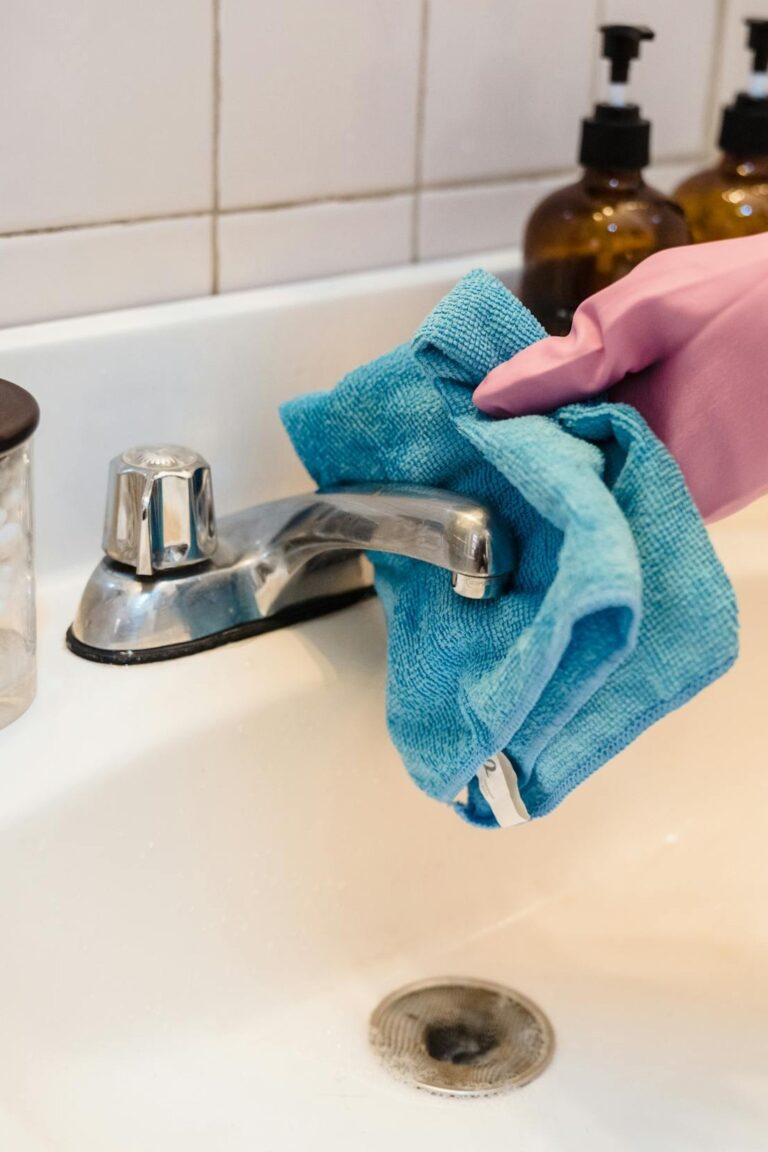
Standard cotton cloths often push dust and debris around rather than trapping it. Microfiber cloth construction captures particles on contact and holds them until rinsed, which generally means fewer passes per surface.
For routine surface cleaning, a damp microfiber cloth can handle most countertop, appliance-front, and cabinet-face tasks without additional product. This tends to reduce both product use and wiping time during the weekly cleaning pass.
Keep separate microfiber cloths for bathrooms and kitchens, storing them in each area. Using color-coded cloths by zone helps prevent cross-contamination and eliminates the need to carry cleaning cloths from room to room.
Set a timer to avoid over-cleaning individual tasks
Without a time boundary, it’s easy to spend disproportionate effort on a single task — detail-cleaning a stovetop while the rest of the routine waits. A timer per task helps maintain pace during weekly cleaning.
A simple approach: assign a loose time target to each task based on room size. Most standard bathroom cleanings can be completed in 10–15 minutes; most kitchen surfaces in 15–20. Timers make it easier to identify which tasks consistently run long and may need their own dedicated session.
Timers are meant to guide your pacing, not define your standards. Tasks involving food-contact surfaces, toilets, or high-use appliances should always be completed thoroughly, regardless of how much time has passed.
Store cleaning supplies in each zone to avoid back-and-forth trips
Fetching supplies from a single central closet adds travel time to every task. Distributing basic supplies — an all-purpose spray, a few microfiber cloths, a scrub pad — to each bathroom and to the kitchen keeps equipment accessible where it’s used.
This setup costs slightly more in products upfront but generally reduces total cleaning time per session by eliminating repeated trips to a supply area.
Vacuum hard floors before mopping them
Mopping over loose debris pushes particles into grout lines and corners rather than removing them. Vacuuming or sweeping hard floors before applying any wet method removes the dry debris layer first.
This sequence applies to the weekly cleaning routine on tile, hardwood, laminate, and vinyl floors. Skipping the dry pass and mopping directly typically results in streaked or gritty floors that require a second mopping pass.
Build a consistent cleaning order you repeat each week
Familiarity with a set sequence reduces the mental effort of planning each session. When the same rooms are cleaned in the same order each week, decisions about what to do next are removed from the process.
A repeatable routine also makes it easier to identify what has been skipped and what might need more frequent attention. Consistency in the weekly house cleaning sequence tends to keep maintenance tasks from accumulating into larger cleaning jobs.
Adjusting Your Routine for Different Home Types
A weekly cleaning schedule that works in a one-bedroom apartment may not be practical in a larger multi-floor home. Room count, surface types, and how the space is used all affect which shortcuts apply and how much time each task realistically requires.
In smaller spaces, a single cart or caddy with all supplies can replace zone storage. In larger homes, dividing the routine across two days — high-traffic areas one day, secondary rooms another — can make the overall cleaning schedule more manageable without sacrificing coverage. Adjusting the routine to match the actual scale and use of the home, rather than applying a fixed weekly cleaning schedule regardless of conditions, tends to produce better results over time.