How to Sanitize Kitchen Countertops
Kitchen countertops accumulate bacteria from raw food prep, spills, and daily contact. Standard wiping removes visible debris but often leaves microorganisms on the surface. Understanding how to sanitize kitchen countertops properly helps reduce bacterial presence to safer levels through chemical action or heat.
Different countertop materials respond to sanitizers in different ways. Porous stone absorbs liquids, while sealed surfaces resist penetration. The methods available depend on material tolerance, available products, and the level of contamination present.
The approaches covered include wet-chemical sanitizing, heat application, and commercial formulations. Each method targets bacterial reduction through distinct mechanisms suited to specific materials and conditions. Selecting the right approach for sanitizing kitchen countertops ensures effective results without damaging the surface.
How to Sanitize Kitchen Countertops
Several approaches reduce bacterial load on kitchen surfaces. Selection depends on material compatibility, contact time requirements, and the type of contamination addressed. Most methods rely on either chemical disruption of bacterial cells or thermal deactivation.
The techniques outlined represent common household and commercial options for sanitizing kitchen countertops. Each addresses sanitization through different active agents and application protocols.
How to Sanitize Kitchen Countertops with Soap and Hot Water
Dish soap combined with hot water disrupts grease and lifts organic matter that harbors bacteria. The surfactants in soap break surface tension, allowing water to penetrate residue. Hot water enhances this action by softening fats and increasing solubility.
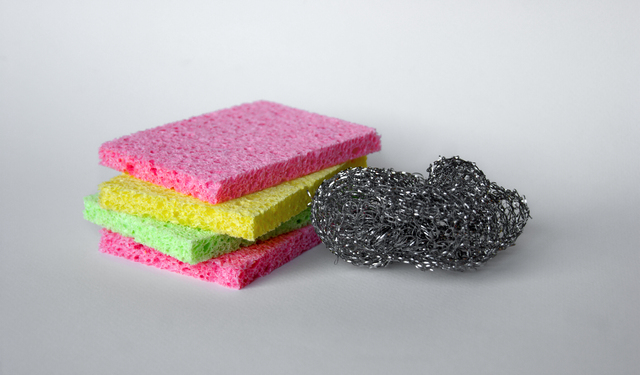
Apply soap to a damp cloth or sponge, then scrub the countertop in overlapping strokes. Rinse with clean water to remove soap film, which can attract dirt if left behind. This method works on most non-porous surfaces including laminate, sealed granite, and quartz.
Soap and water alone may not kill all bacteria but typically removes enough organic material to reduce bacterial populations. For routine cleaning between deeper sanitizing sessions, this approach maintains baseline surface hygiene on kitchen countertops.
Sanitize Kitchen Countertops Using Diluted Bleach Solution
Bleach contains sodium hypochlorite, which oxidizes bacterial cell walls and denatures proteins. A solution of one tablespoon bleach per gallon of water provides sufficient concentration for sanitizing kitchen countertops without excessive chemical exposure. This ratio meets general food-contact surface guidelines.
Mix the solution in a spray bottle or basin. Apply to the countertop and allow contact time of at least one minute. Bleach requires wet contact to function—surfaces must remain visibly damp during this period.
Do not use bleach on natural stone, wood, or unsealed grout, as it can cause discoloration or material degradation. Rinse thoroughly after the contact period to prevent residue buildup. Ventilate the area during use to reduce chlorine vapor concentration.
How to Sanitize Countertops with Hydrogen Peroxide
Hydrogen peroxide releases oxygen when it contacts organic material, disrupting bacterial cell membranes. Household peroxide at 3% concentration can be used directly from the bottle without dilution. It breaks down into water and oxygen after use, leaving minimal residue on kitchen countertops.
Spray peroxide onto the countertop surface and let it sit for several minutes. The bubbling action indicates active oxidation of organic compounds. Wipe with a clean cloth after the recommended contact time, typically three to five minutes.
Peroxide tends to be gentler on colored surfaces compared to bleach when sanitizing kitchen countertops. It can be used on laminate, sealed stone, and solid surface materials. Avoid prolonged exposure on porous materials, as moisture retention may lead to staining or weakening.
Sanitizing Kitchen Countertops with Rubbing Alcohol
Isopropyl alcohol at 70% concentration denatures bacterial proteins and dissolves lipid membranes. This concentration provides more effective sanitization than higher percentages because water slows evaporation, extending contact time. Alcohol evaporates quickly, reducing the need for rinsing.
Apply rubbing alcohol to a cloth or spray directly onto the countertop. Wipe across the surface in a single direction to avoid redistributing contaminants. Allow the surface to air-dry, which typically takes under a minute.
This method suits quick sanitizing of kitchen countertops between meal preparations. It works on most sealed countertops but may dull or damage certain finishes with repeated use. Test on an inconspicuous area if the surface finish is unknown.
How to Sanitize Kitchen Countertops with Commercial Sanitizers
Manufactured sanitizers combine quaternary ammonium compounds, alcohols, or other antimicrobial agents formulated for food-contact surfaces. These products list kill times and bacteria types on the label, providing specific performance data. Most require no rinsing when used as directed for sanitizing kitchen countertops.
Follow the manufacturer’s contact time instructions to achieve the stated sanitization level. Spray or wipe the product across the entire surface, ensuring even coverage. Some formulations include surfactants that help lift debris while sanitizing.
Commercial sanitizers often address a broader spectrum of pathogens compared to single-agent methods. Check compatibility with countertop material before use, particularly on natural stone or wood. Store according to label instructions to maintain product effectiveness.
Sanitize Countertops Using Steam Cleaning
Steam sanitizers use water heated above 212°F to kill bacteria through thermal exposure. The moisture and heat penetrate surface irregularities where residue collects. Handheld steam cleaners designed for kitchen use typically reach temperatures sufficient for sanitization within a short time, often under a minute, depending on the model and surface.
Hold the steam nozzle several inches from the surface and move slowly across the countertop. Avoid prolonged steam exposure on unsealed wood or grout, as moisture can cause swelling or mold growth. Wipe the surface with a dry cloth immediately after steaming to remove loosened debris and condensation.
Steam sanitizing requires no chemicals, making it suitable for households avoiding chemical exposure when cleaning kitchen countertops. It works on heat-tolerant materials like tile, sealed stone, and stainless steel. Verify material heat tolerance before use to prevent damage.
How to Sanitize Countertops with Disinfecting Wipes
Pre-moistened disinfecting wipes contain sanitizing agents in a ready-to-use format. The wipes combine mechanical scrubbing with chemical action, removing debris while applying antimicrobial compounds. Most are formulated for hard, non-porous surfaces.
Remove a wipe from the container and scrub the countertop in overlapping passes. Discard the wipe after use—do not rinse and reuse. Allow the surface to remain wet for the time specified on the package, generally between 30 seconds and four minutes.
Disinfecting wipes provide convenience for quick cleanups after handling raw meat or other high-risk foods on kitchen countertops. Check the active ingredient list to confirm compatibility with countertop material. Some wipes contain bleach or alcohol, which may affect certain finishes.
Countertop Material Considerations When Sanitizing
Material composition determines which methods can be used to sanitize kitchen countertops without causing damage. Non-porous surfaces like quartz and laminate tolerate most chemical sanitizers. Porous materials like marble or unsealed granite may absorb liquids, leading to staining or structural weakening.
Test any new sanitizer on a small, hidden area before applying it to the entire countertop. Natural stone often requires pH-neutral cleaners to avoid etching. Wood countertops generally need low-moisture methods to prevent warping or cracking.
Sealed surfaces resist chemical penetration and moisture absorption, extending the range of compatible sanitizers for kitchen countertops. Regular resealing helps maintain this protection on materials like stone and grout. Always follow the manufacturer’s recommendations for specific countertop products when available.