How to Make Your Laundry Dry Faster
Wet laundry that takes too long to dry can develop odors, wrinkles, or mildew. Making laundry dry faster typically reduces these issues and makes the process more efficient.
Different methods apply depending on dryer type, fabric weight, available tools, and indoor or outdoor conditions. Some approaches focus on pre-treatment before drying begins, while others adjust the drying environment or equipment settings.
This guide covers mechanical prep steps, airflow adjustments, moisture reduction techniques, and material-specific methods that help laundry dry faster under common household conditions.
Spin Laundry Twice to Remove Excess Water
Running a second spin cycle before drying reduces water content in fabric and helps laundry dry faster in the dryer. Most washing machines allow an extra spin without adding detergent or water.
Heavier fabrics like towels and jeans benefit from double spinning. Thinner materials may not show significant improvement. The method works for both top-load and front-load machines and can reduce drying time by 15 to 30 minutes depending on load size.
Extra spinning does not damage most fabrics but may increase wrinkles in delicate items. Less water in the fabric means the dryer evaporates less moisture.
Also Read: 6 Ways to Keep Your Washing Machine From Smelling
Use a Dry Towel in the Dryer Load
Placing one dry towel in a wet load helps absorb moisture during the first 10 to 15 minutes of drying. The towel pulls water from other items and increases heat circulation.
Remove the towel after the initial period. Leaving it longer can slow drying as the towel becomes saturated. This method works best with medium to large loads and typically shortens total dryer time.
Smaller loads may not benefit significantly. The dry towel should be similar in weight to the wet items to avoid imbalance while helping laundry dry faster.
Separate Heavy and Light Fabrics
Mixing heavy towels with light t-shirts creates uneven drying and prevents laundry from drying faster. Heavier items retain more water and take longer to dry, which keeps lighter fabrics tumbling in moisture.
Sorting by fabric weight allows each load to dry at a similar rate. Towels, jeans, and sweatshirts form one group. Sheets, shirts, and lightweight pants form another.
This approach often reduces total drying time across multiple loads and helps laundry dry faster by preventing over-drying of thin fabrics. It also helps prevent over-drying thinner fabrics, which can lead to shrinkage and more static.
Increase Airflow Around Wet Clothes on a Rack
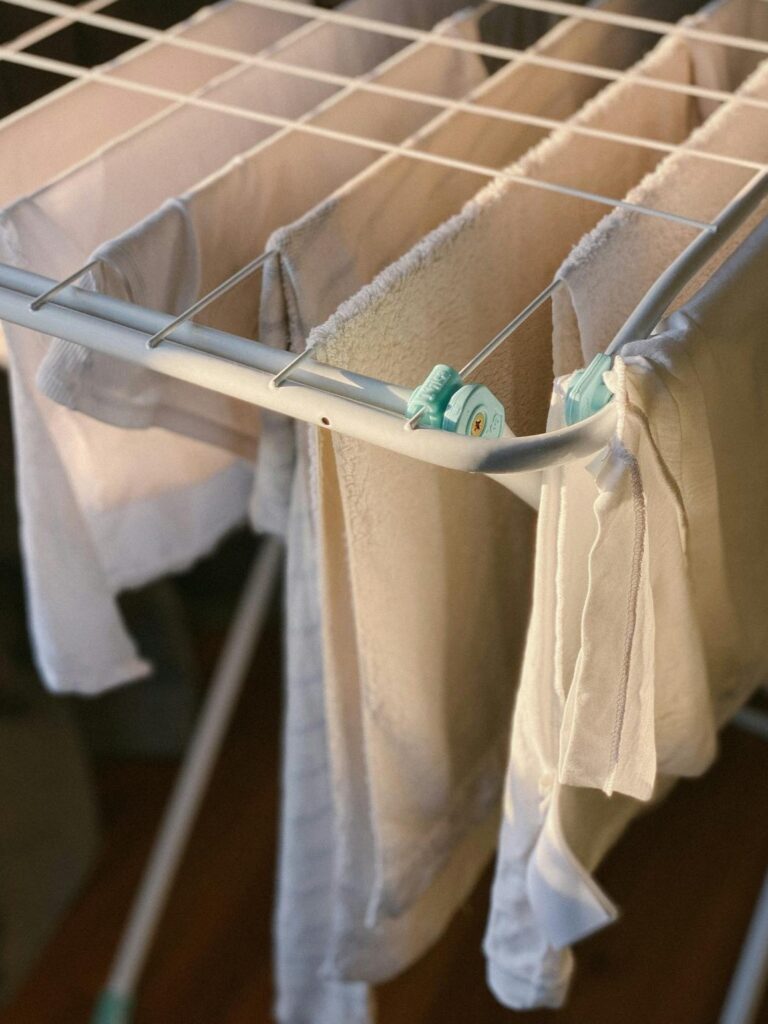
Laundry drying on a rack dries faster when air moves freely on all sides. Avoid placing racks against walls or in corners where airflow is limited and wet clothes take longer to dry.
Position racks near open windows, fans, or heating vents when possible to make laundry dry faster. Space items so fabric does not overlap or touch. Overlapping fabric traps moisture and slows evaporation.
Turning items periodically exposes damp areas to air. This method applies to indoor drying without mechanical equipment and can help laundry dry faster in rooms with good ventilation.
Also Read: How to Keep the Laundry Area Dust-Free
Adjust Dryer Settings for Fabric Type
Most dryers offer heat and time settings suited to different materials. High heat can make laundry dry faster for cotton and towels but can damage synthetics or elastic.
Medium heat works for mixed loads and reduces the risk of shrinkage while still helping laundry dry faster. Timed dry cycles may over-dry or under-dry depending on load size. Sensor dry settings stop the cycle when moisture drops to a set level, which can make laundry dry faster by preventing unnecessary runtime.
Check manufacturer guidelines for fabrics like wool, activewear, or delicates. Some materials dry faster on low heat with longer cycles, while others need high heat to make laundry dry faster efficiently.
Shake Out Clothes Before Drying
Shaking each item before placing it in the dryer or on a rack loosens folds and separates fabric layers, which helps laundry dry faster. Bunched or tangled laundry traps water inside folds.
This step takes less than a minute per load and can reduce drying time noticeably. It improves air contact with all fabric surfaces, allowing wet laundry to dry faster in both machines and on racks.
The method applies to both machine and air drying. It works particularly well with sheets, pants, and long-sleeve shirts that tend to twist together.
Clean the Dryer Lint Filter Before Each Load
A clogged lint filter restricts airflow and can significantly increase drying time. Most dryers have a removable filter near the door or on top of the machine.
Remove lint by hand or with a soft brush after every load. Lint buildup reduces dryer efficiency and creates a fire hazard. A clean filter allows hot air to circulate properly, which helps laundry dry faster with less energy use.
Some filters also collect fabric softener residue. Washing the filter with soap and water every few months (or whenever you notice buildup) can improve airflow further and can make your laundry dry faster.
Also Read: 8 Areas to Clean Around Your Washing Machine
Use Dryer Balls or Clean Tennis Balls
Dryer balls or tennis balls help lift and separate laundry as the dryer tumbles. This increases airflow between items and reduces drying time.
Wool dryer balls may absorb a small amount of moisture, but their biggest benefit is keeping fabrics separated so hot air circulates better. Plastic or rubber dryer balls don’t absorb water, but they still help improve airflow. Clean tennis balls can work in a similar way (especially for bedding), as long as they’re odor-free and won’t transfer dye.
Add two to four balls depending on load size. The method tend to work well with medium to large loads where items tend to clump together and take longer to dry.
Hang Clothes in Direct Sunlight or Moving Air
Outdoor drying in sunlight and wind typically makes laundry dry faster than still indoor air. Sunlight provides heat, and wind increases evaporation.
Hang items on a line or rack with space between each piece to help wet laundry dry faster. Avoid stacking or folding wet laundry over the line. Direct sun exposure can fade dark colors over time, so some fabrics benefit from shade drying in moving air.
Indoor drying near a fan or dehumidifier also speeds the process and can make laundry dry faster when outdoor drying is not possible. Moving air removes moisture from fabric surfaces more quickly than stagnant air.
Also Read: How to Keep the Laundry Area Dust-Free
Run Smaller Loads
Overloading a dryer reduces airflow and tumbling space, which can prevent laundry from drying faster. Items in a packed dryer do not separate fully, which traps moisture inside folds.
Filling the dryer to about two-thirds capacity allows better air circulation. Smaller loads often dry faster and more evenly than large ones.
This approach may require running more loads, but total drying time per item decreases. It also reduces wear on dryer components while helping your laundry dry faster with each cycle.
Wring Out Excess Water by Hand for Delicates
Delicate fabrics that cannot go in a dryer often hold significant water after washing. Gently twisting or pressing fabric removes some of this moisture and helps delicate laundry dry faster before air drying.
Do not wring fragile items aggressively. Press the fabric between two dry towels and apply gentle pressure instead. This method protects fibers while reducing drying time.
Hanging wrung-out delicates on a rack in a well-ventilated area helps them dry faster. The less water in the fabric, the quicker the laundry will dry and be ready to wear or store.

We hope you enjoyed this article on how to make your laundry dry faster. If you found these laundry drying tips helpful, share them with your friends on Facebook and Pinterest!