How to Clean Door Handles With Hydrogen Peroxide in 6 Ways
Hydrogen peroxide has been a medicine cabinet staple for decades. At 3% concentration — the standard pharmacy formulation — it works as a mild oxidizing agent that can break down residue on hard surfaces without leaving behind chemical buildup. On door handles, it’s a straightforward option that doesn’t require much equipment or prep.
Cleaning door handles with hydrogen peroxide follows the same basic principle as other hard surface applications: apply, allow dwell time, and wipe. The oxidizing reaction does most of the work, which makes it useful in situations where a basic wipe-down hasn’t been sufficient. It’s also compatible with a range of finish types, with a few exceptions worth knowing before starting.
The methods below cover six approaches to door handle cleaning with hydrogen peroxide — varying by tool, finish type, soil level, and hardware configuration.
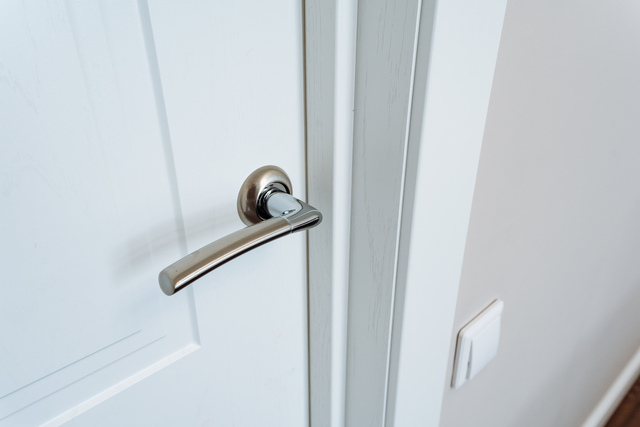
6 Ways to Clean Door Handles With Hydrogen Peroxide
Hydrogen peroxide at 3% concentration is the standard starting point for most door handle applications. Higher concentrations exist but are generally unnecessary for routine surface cleaning and can damage finishes or irritate skin on contact. The methods here use hydrogen peroxide as the primary cleaning agent, with variations based on handle material, tool choice, and soil level.
Spray Bottle Method for Standard Interior Door Handles
This is the most straightforward approach for painted, chrome, or powder-coated handles. Fill a clean spray bottle with 3% hydrogen peroxide. Mist the handle surface, including the neck and base plate, and allow it to sit for 30–60 seconds before wiping with a lint-free cloth.
Do not let hydrogen peroxide pool around the base plate — prolonged contact with the wall plate or any surrounding painted trim can cause surface lightening over time. A quick pass with a dry cloth after the dwell time is usually sufficient.
For lightly soiled handles, one application tends to be enough. For handles with visible buildup around mounting screws or in textured grip areas, a second pass with a soft-bristle brush may help before the final wipe.
Also Read: How to Clean Canvas Bags With Hydrogen Peroxide
Microfiber Cloth Wipe-Down for Brass and Bronze Finishes
Brass and bronze handles — whether solid or plated — are sensitive to strong oxidizers used repeatedly over time. Hydrogen peroxide can affect the patina on unlacquered brass if applied in high frequency. For these finishes, a dampened microfiber cloth is a lower-risk application method compared to direct spray.
Saturate a microfiber cloth lightly with 3% hydrogen peroxide. Wring it so it’s damp, not dripping. Wipe the handle in the direction of any visible grain or brush pattern.
Lacquered brass can handle this method with less risk, but it’s worth doing a spot check on an inconspicuous area first. Unlacquered finishes may respond differently depending on the alloy and existing oxidation.
Cotton Swab Detail Cleaning Around Handle Hardware
Lever handles and knob-style handles typically have crevices near the escutcheon plate, around the latch strike, and at the point where the handle joins the spindle. A standard cloth doesn’t reach these areas effectively.
Dip a cotton swab in 3% hydrogen peroxide and work it into seams, screw holes, and tight curves. This method is slow but thorough for detailed cleaning. It’s particularly useful on door handles that haven’t been cleaned in several months.
Discard used swabs immediately — reusing them deposits material back onto the surface. For a single lever handle, four to six swabs are typically sufficient for a thorough pass.
How to Clean Stainless Steel Door Handles With Hydrogen Peroxide
Stainless steel is one of the more forgiving finishes for hydrogen peroxide use. It doesn’t tarnish or mottle the way softer metals can. A direct spray or cloth application at 3% concentration is generally compatible with brushed and polished stainless finishes.
Apply hydrogen peroxide and allow it to dwell for up to 60 seconds. Wipe clean with a dry microfiber cloth, following the brushed grain direction on matte finishes to avoid cross-grain streaking.
For polished stainless, a dry buff after cleaning can help restore surface clarity. Hydrogen peroxide tends to leave minimal residue, but on high-gloss finishes, even trace moisture can show as water marks.
Also Read: How to Clean Plastic Cutting Boards With Hydrogen Peroxide
Soaking Removable Handle Escutcheons and Backplates
Some door hardware uses removable escutcheon plates or backplates that can be taken off the door for cleaning. If hardware is removable and made of stainless, chrome, or nickel, a short soak can reach areas a cloth cannot.
Fill a small container with 3% hydrogen peroxide and submerge the removed hardware for 5–10 minutes. Remove, rinse with clean water, and dry thoroughly before reinstalling.
Do not soak lacquered, painted, or plated hardware — extended submersion can lift coatings and cause adhesion failure or flaking. Check the manufacturer’s finish type before using this method. If the finish type is unknown, use a damp cloth application instead.
Using Hydrogen Peroxide With a Soft-Bristle Brush for Textured Grips
Some commercial and industrial door handles use textured or knurled grip surfaces that trap oils and debris in small recesses. A cloth alone tends to skim the surface without extracting buildup from those recessed areas.
Apply 3% hydrogen peroxide directly to a soft-bristle brush — a clean toothbrush or a detail brush with natural or nylon bristles works well. Scrub the textured areas in short strokes, then wipe the surface dry with a clean cloth.
This method is also useful on rubberized or grip-coated handles, though hydrogen peroxide may gradually affect rubberized surfaces with very frequent use. For rubber-coated handles cleaned more than once a week, rotating with plain water wiping on alternate sessions can help extend the coating’s condition.
Also Read: How to Clean Plastic Storage Containers With Hydrogen Peroxide
What to Know Before Cleaning Door Handles With Hydrogen Peroxide
Hydrogen peroxide is an oxidizing agent, not a surfactant. That distinction affects how it performs on different soils. It tends to work well on biological residue and light surface contamination. It’s less effective on heavy grease or waxy buildup, which typically requires a degreaser first.
Concentration matters. Most pharmacy-grade hydrogen peroxide is sold at 3%, which is appropriate for surface cleaning. Industrial-grade concentrations above 6% are not necessary for door handle cleaning and increase the risk of skin irritation and finish damage.
Storage and shelf life affect performance. Hydrogen peroxide degrades when exposed to light. Store it in its original opaque bottle, and check that it still fizzes lightly on contact with a surface before using it for cleaning — flat, non-reactive hydrogen peroxide has likely lost most of its oxidizing capacity.
Avoid using hydrogen peroxide on anodized aluminum without a spot test first. Some anodized finishes can react unevenly to oxidizers, particularly on colored anodizing. A 30-second spot test on the underside or back of the handle is a reasonable precaution before full application.
Frequency also matters. Door handles in high-traffic areas — entryways, bathrooms, kitchen doors — can reasonably be cleaned once or twice per week. Lower-traffic handles may only need monthly attention. Adjusting cleaning frequency to actual use tends to reduce unnecessary wear on the finish over time.
We hope you enjoyed this guide on how to clean door handles with hydrogen peroxide. If you found it helpful, please share it on Facebook or Pinterest.